


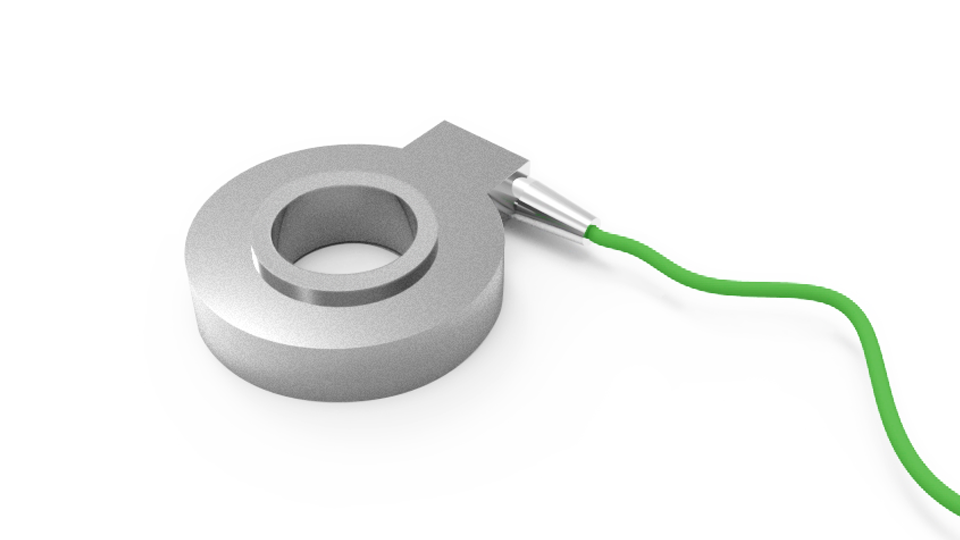

Cellules de charge électro-hydrauliques pour les soutènements en acier et les butons


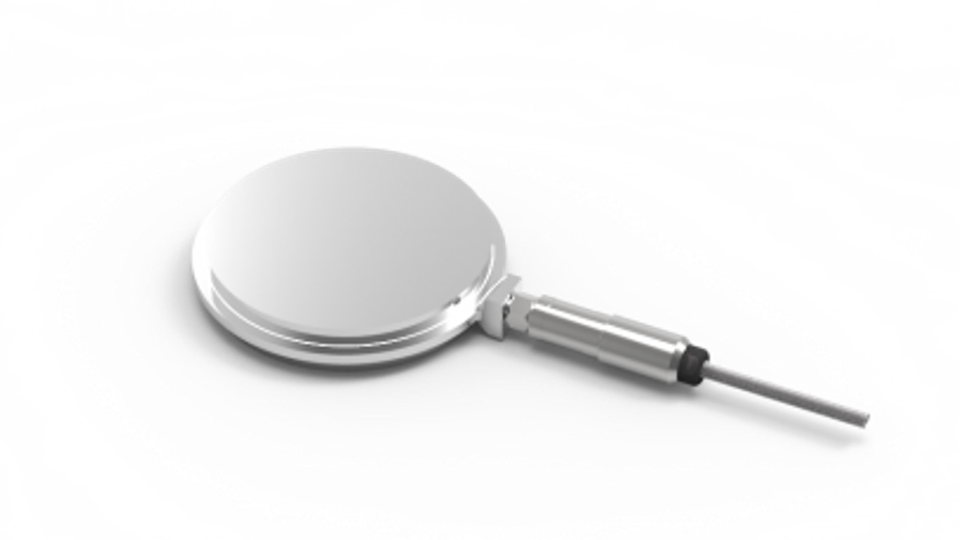
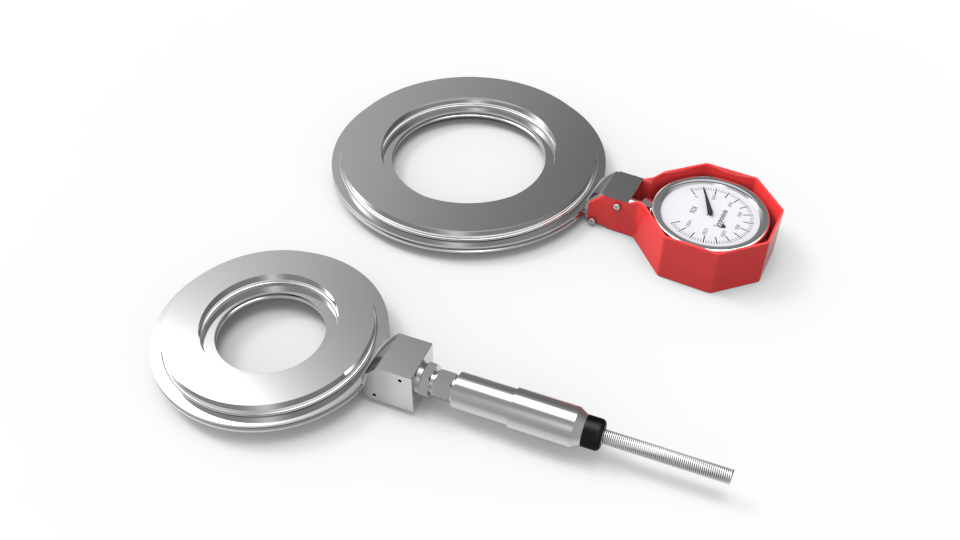
Les cellules de charge électro-hydrauliques sont composées d’une surface en acier inoxydable et d’un capteur de pression.
La cellule est composée de deux plaques soudées entre elles sur leur périphérie avec un espace interstitiel rempli sous vide avec de l’huile désaérée afin d’assurer une rigidité maximale; ainsi, la charge est transmise sous la forme d’une pression mesurée par le capteur connecté.
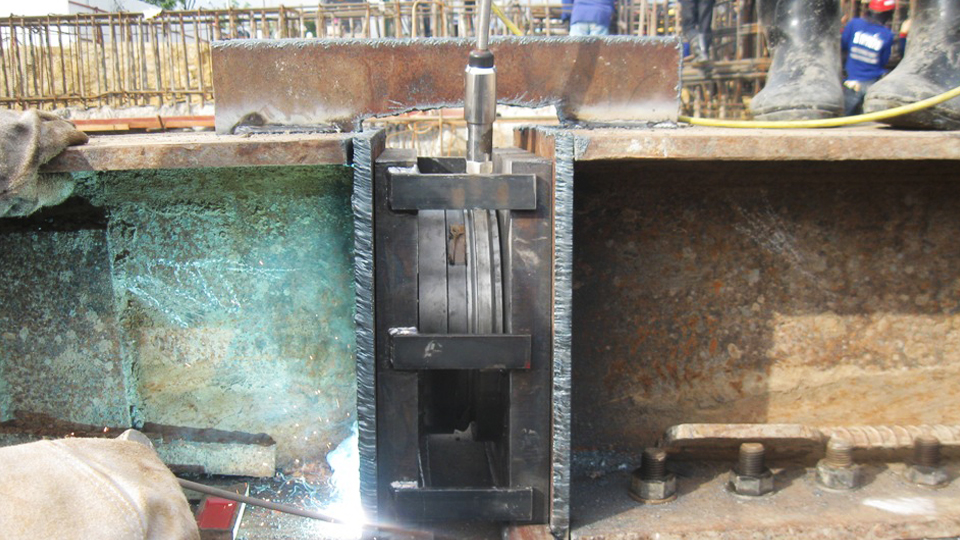
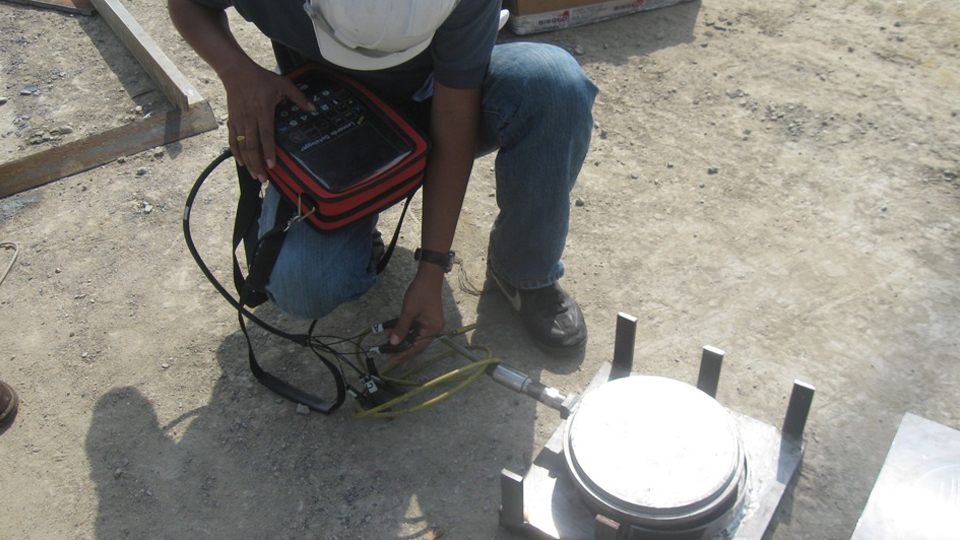
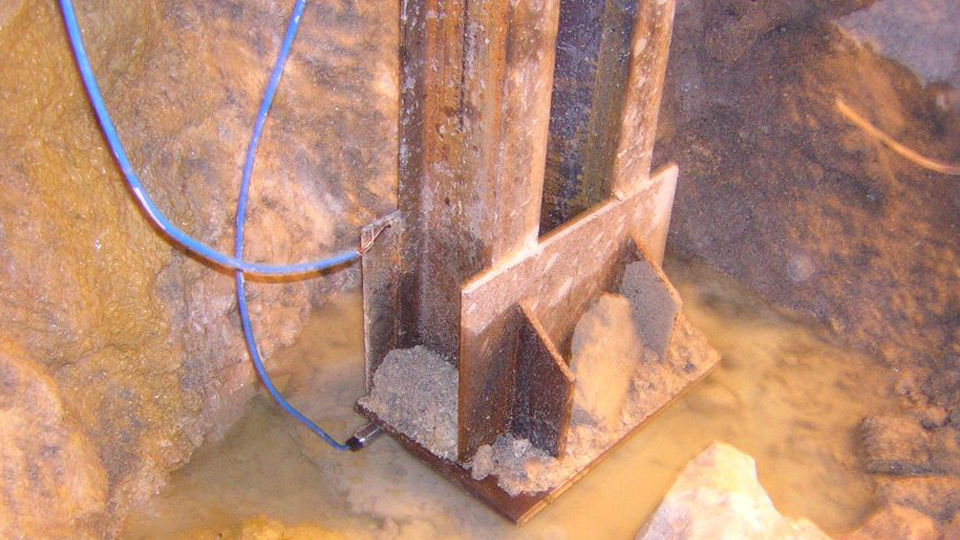
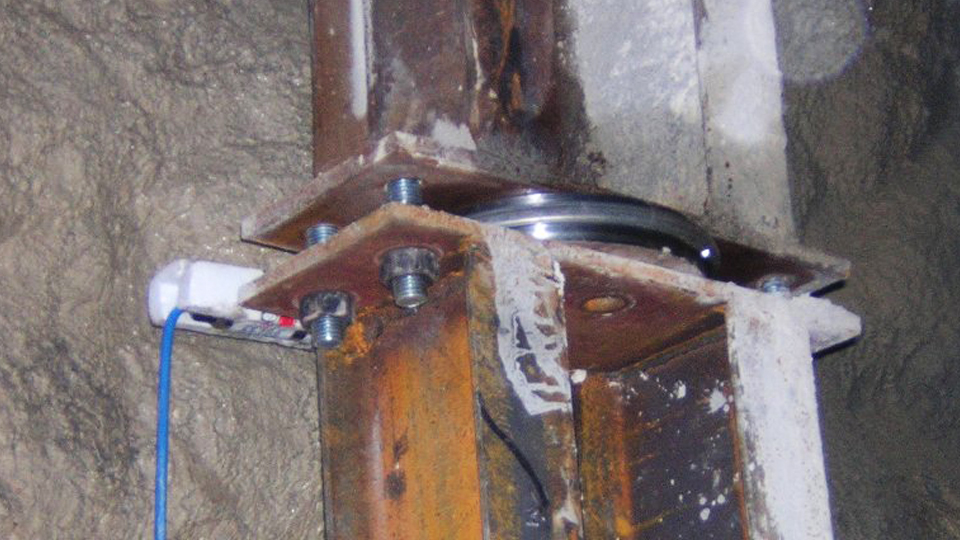
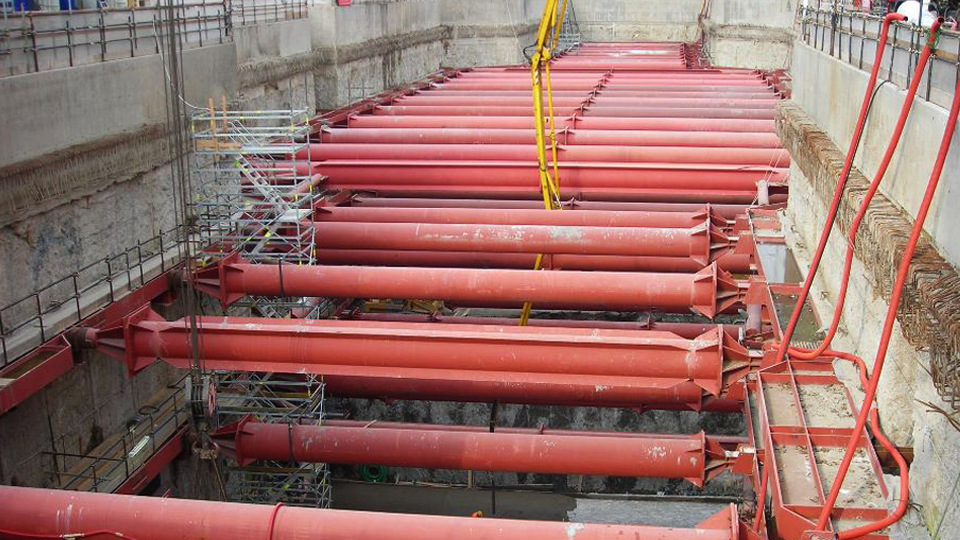
Ces cellules de charge sont conçues spécialement pour la surveillance des soutènements et des butons en acier.
Des plaques de répartition jumelées spéciales sont disponibles pour l’application entre des surfaces non parallèles.
Resistive pressure transducer sensor is a spin off from thick film technology using the piezo-resistive characteristic of specific resistive inks. Resistors, formed using screen printing techniques, are deposited on a deformable ceramic diaphragm substrate to form strain gauge arrays. Strain changes from external loads applied to the deformable ceramic diaphragm result in resistance changes of the strain gauge arrays.
The electric signal from the strain gauge arrays is directly proportional to the stress applied to the diaphragm. Sensor is constructed of a ceramic, analogous to a crystal structure, to form a pressure diaphragm chemically inert with near perfect mechanical characteristics. Screen printed resistors are deposited onto the diaphragm to form a 4 arms Wheatstone bridge.
A fixed excitation voltage is applied to one diagonal of the circuit. Strains experienced by the diaphragm will change the values of the individual resistors within the Wheatstone bridge resulting in a bridge unbalance. This unbalance produce an output signal from the other diagonal of the Wheatstone bridge, directly proportional to the applied stress.
An electronic board converts this signal into 4-20 mA suitable for transmission over long distances to remote readouts or to data acquisition systems.
Lisible par
Fiche technique
Manuel
Traitement des données
Faq connexes
Fiche technique
Manuel
Traitement des données
Faq connexes