




Capteurs de pression amovibles


Codes de référence: PK45C, P252C
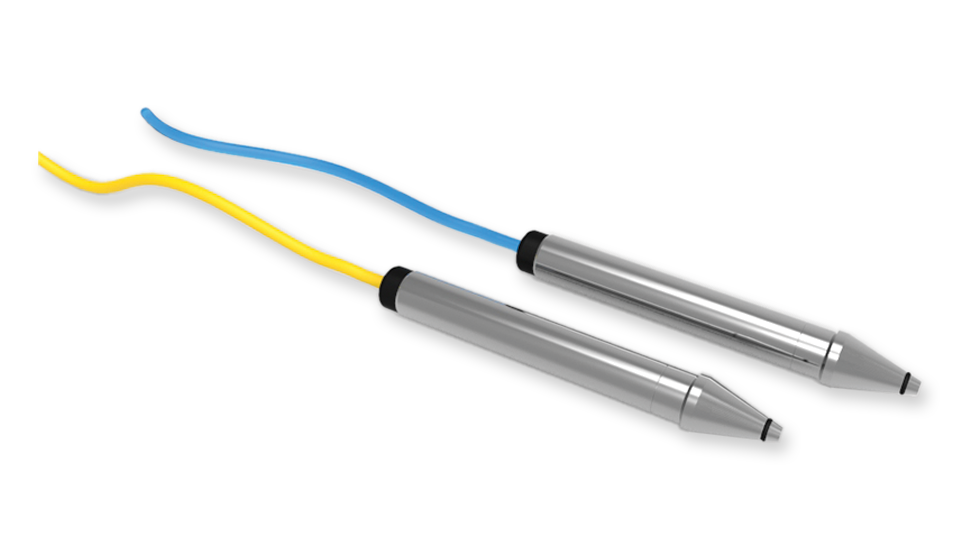
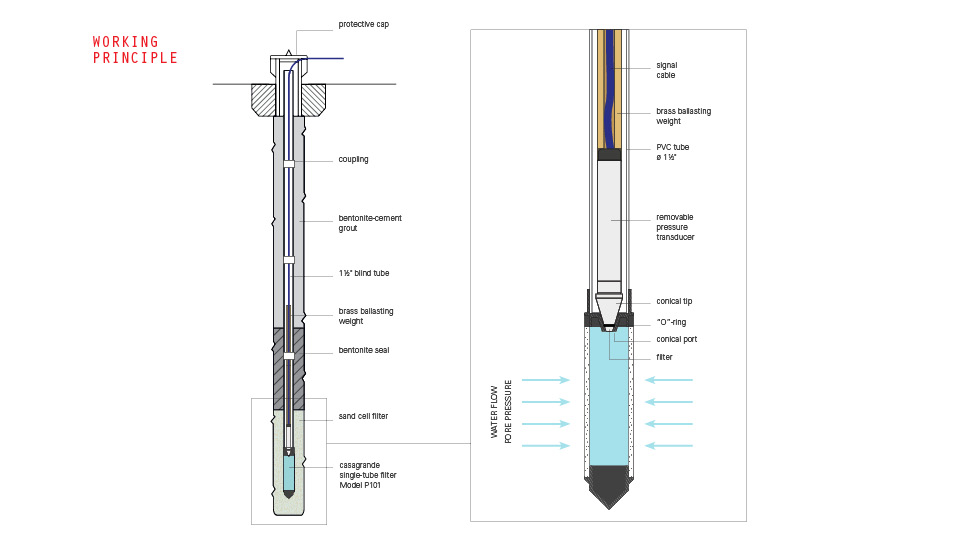
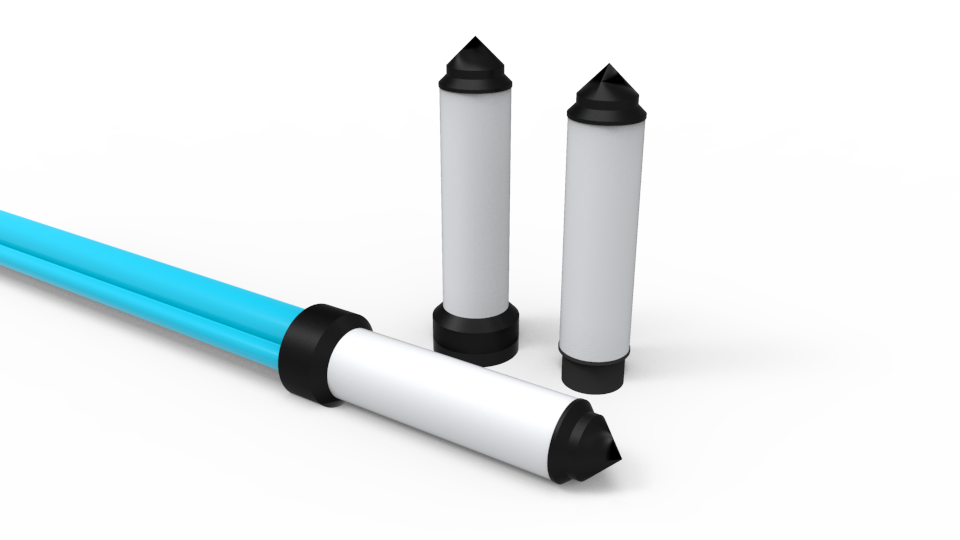
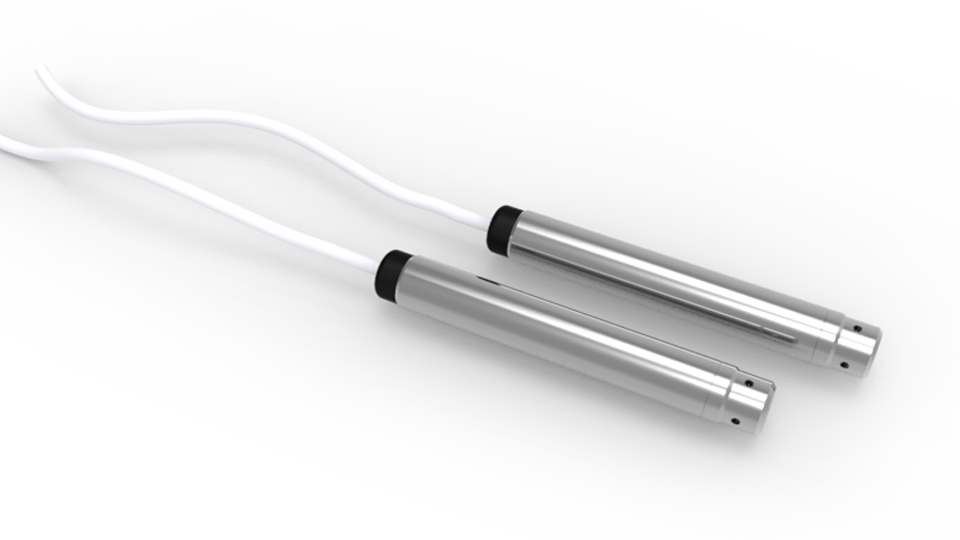
Le capteur de pression amovible est conçu pour mesurer la pression interstielle dans une pointe filtrante Casagrande.
Sa forme est particulièrement adaptée au suivi à long terme car elle permet de récupérer l’instrument pour réétalonnage. Le capteur de pression amovible existe en technologie à corde vibrante ou piézo-résistive.
APPLICATIONS
• Surveillance à long terme
• Adapté aux zones exposées à la foudre (car il peut être remplacé)
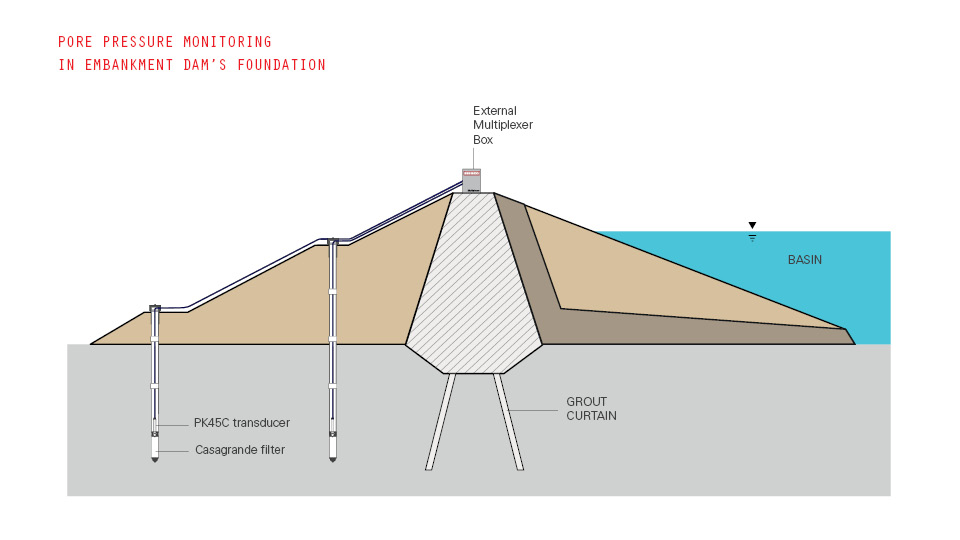
• Barrages et remblais
• Mesure de la pression interstitielle du sol
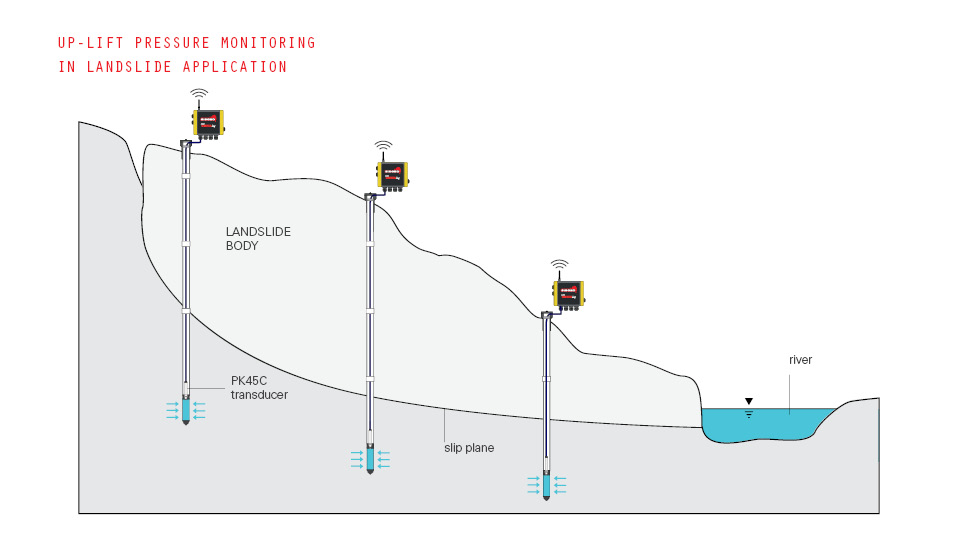
• Surveillance des glissements de terrain
• Sites présentant des pentes naturelles ou aménagées
CARACTÉRISTIQUES
• Amovible pour permettre un étalonnage et une vérification plus approfondis
• La longueur du câble n’affecte pas la mesure
• Protection intégrée contre les surtensions et capteur de température (modèle à corde vibrante uniquement)
• S’il est retiré, le piézomètre Casagrande continue de fonctionner avec l’indicateur manuel de niveau d’eau
Resistive pressure transducer sensor is a spin off from thick film technology using the piezo-resistive characteristic of specific resistive inks. Resistors, formed using screen printing techniques, are deposited on a deformable ceramic diaphragm substrate to form strain gauge arrays. Strain changes from external loads applied to the deformable ceramic diaphragm result in resistance changes of the strain gauge arrays.
The electric signal from the strain gauge arrays is directly proportional to the stress applied to the diaphragm. Sensor is constructed of a ceramic, analogous to a crystal structure, to form a pressure diaphragm chemically inert with near perfect mechanical characteristics. Screen printed resistors are deposited onto the diaphragm to form a 4 arms Wheatstone bridge.
A fixed excitation voltage is applied to one diagonal of the circuit. Strains experienced by the diaphragm will change the values of the individual resistors within the Wheatstone bridge resulting in a bridge unbalance. This unbalance produce an output signal from the other diagonal of the Wheatstone bridge, directly proportional to the applied stress.
An electronic board converts this signal into 4-20 mA suitable for transmission over long distances to remote readouts or to data acquisition systems.
Vibrating wire transducer is essentially composed by a taut wire clamped at its ends and tensioned so that it is free to vibrate at its natural frequency. The frequency of vibration varies with the wire tension and thus small relative movements between the two end clamps.
With vibrating wire transducers frequencies rather than voltage levels are measured, so a dedicated readout/datalogger must be used to measure the resonant frequency. These ones excites the vibrating wire transducer, measures the response, performs some calculations on the response, and returns the result.
SISGEO vibrating wire transducer uses ‘pluck and read’ method and not ‘auto resonant’ method; when the readout/datalogger plucks the wire a magnetic attraction is created to the coil and the wire start to vibrate and it causes an alternating voltage of the same frequency of the natural frequency of the wire; the voltage signal is transmitted on the cable and read from the readout/datalogger.
Vibrating wire transducers have a reputation for long expected life and long-term stability.
Lisible par
Fiche technique
Manuel
Faq connexes
Fiche technique
Manuel
Faq connexes