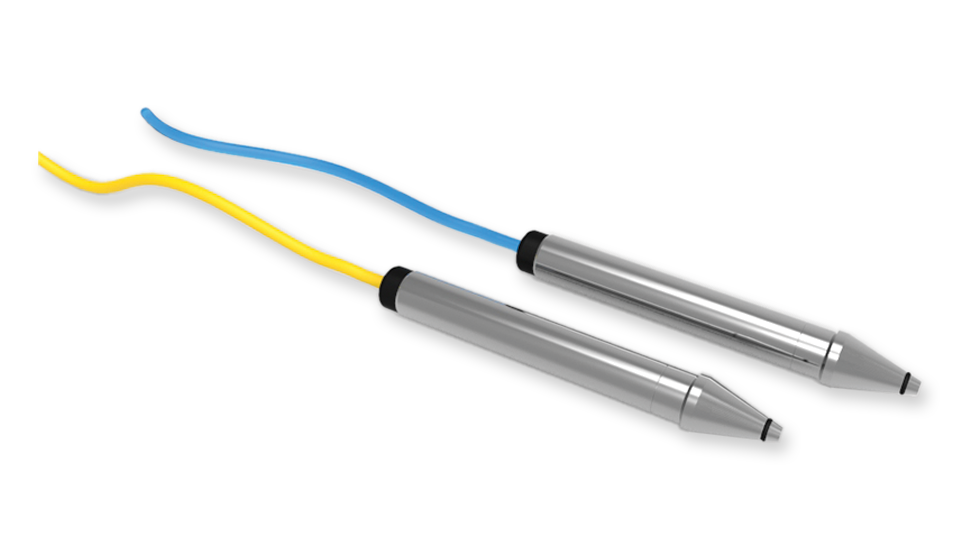




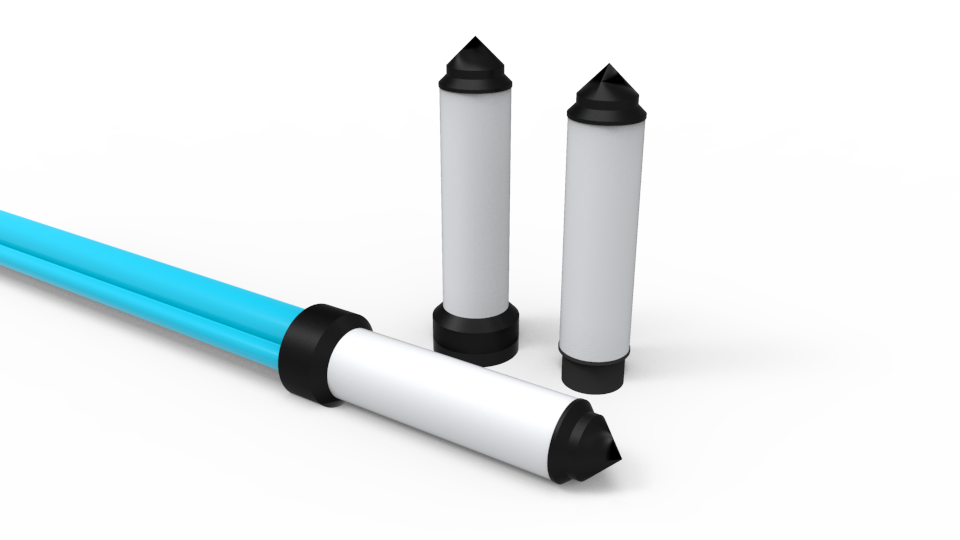
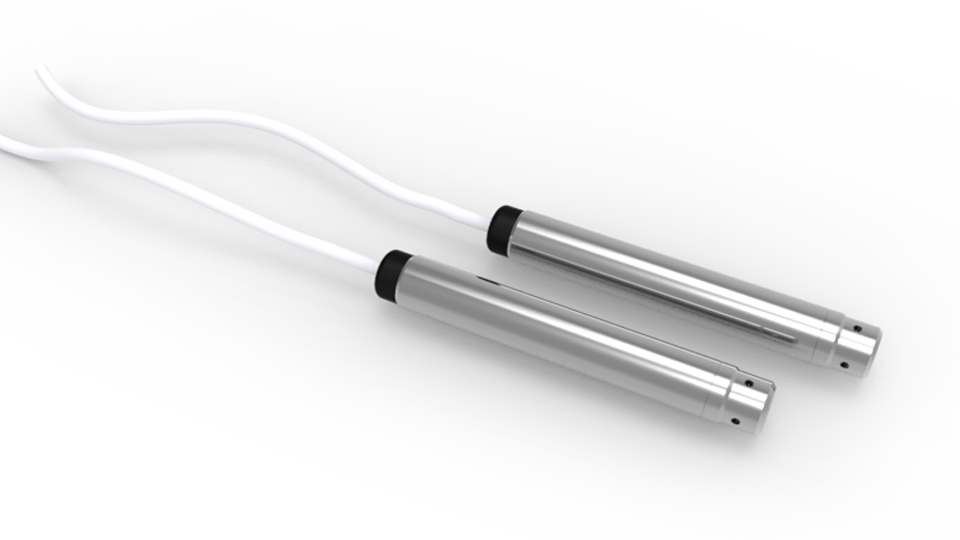

Transductores de presion removibles


Códigos de referencia de los productos: PK45C, P252C
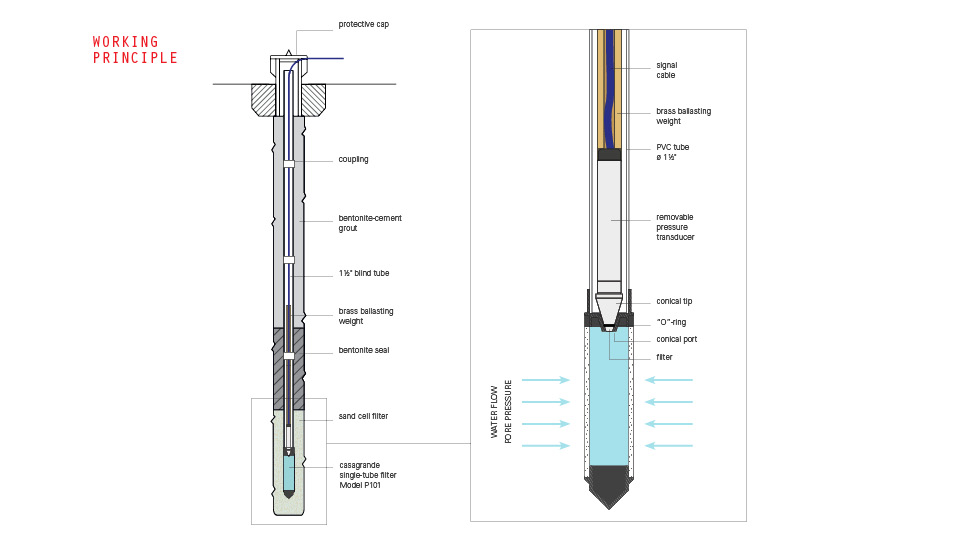
Los transductores de presión están especialmente diseñados para el monitoreo a largo plazo de la presión de poro del terreno a través de una punta de filtro especial Casagrande.
Pueden ser removidos para el control de la calibración, mantenimiento o re-uso en otros pozos. Los transductores de presión removibles se instalan en piezómetros de Casagrande con el filtro poroso P101, el cual se acopla con la punta cónica de la carcasa del transductor.
APLICACIONES
• Monitorización a largo plazo
• Adecuado para zonas propensas a los rayos (ya que se puede sustituir)
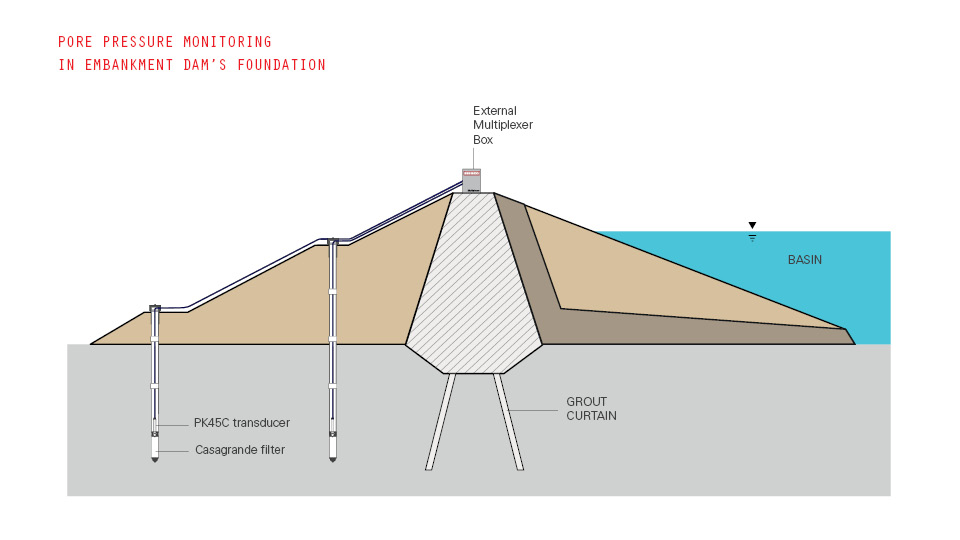
• Presas y terraplenes
• Medición de la presión intersticial del suelo
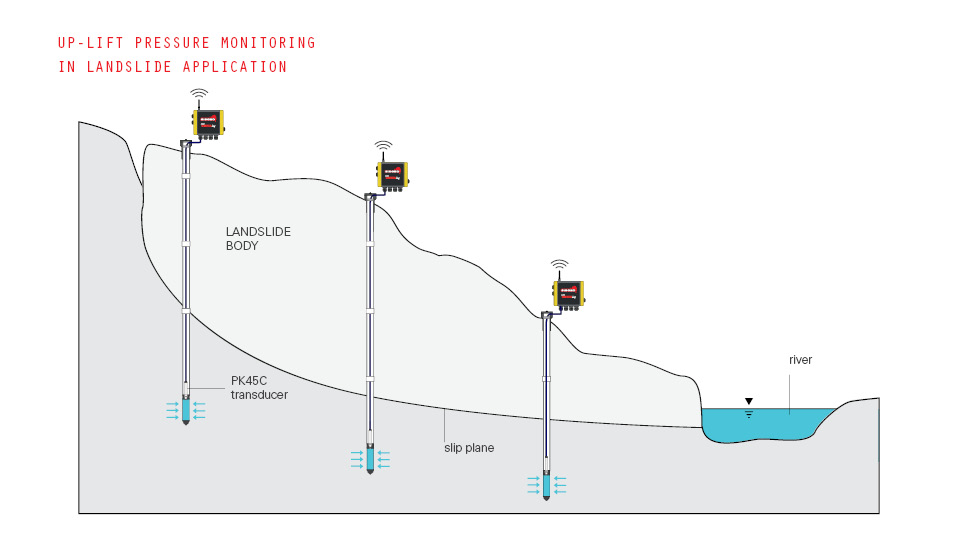
• Monitorización de deslizamientos de tierra
• Taludes naturales o excavados
CARACTERÍSTICAS
• Desmontable para su posterior calibración y comprobación
• La longitud del cable no afecta a la lectura
• Protección contra sobretensiones y sensor de temperatura integrados (solo en el modelo de cuerda vibrante)
• Si se desmonta, el piezómetro Casagrande sigue funcionando con el indicador manual de nivel de agua
Resistive pressure transducer sensor is a spin off from thick film technology using the piezo-resistive characteristic of specific resistive inks. Resistors, formed using screen printing techniques, are deposited on a deformable ceramic diaphragm substrate to form strain gauge arrays. Strain changes from external loads applied to the deformable ceramic diaphragm result in resistance changes of the strain gauge arrays.
The electric signal from the strain gauge arrays is directly proportional to the stress applied to the diaphragm. Sensor is constructed of a ceramic, analogous to a crystal structure, to form a pressure diaphragm chemically inert with near perfect mechanical characteristics. Screen printed resistors are deposited onto the diaphragm to form a 4 arms Wheatstone bridge.
A fixed excitation voltage is applied to one diagonal of the circuit. Strains experienced by the diaphragm will change the values of the individual resistors within the Wheatstone bridge resulting in a bridge unbalance. This unbalance produce an output signal from the other diagonal of the Wheatstone bridge, directly proportional to the applied stress.
An electronic board converts this signal into 4-20 mA suitable for transmission over long distances to remote readouts or to data acquisition systems.
Vibrating wire transducer is essentially composed by a taut wire clamped at its ends and tensioned so that it is free to vibrate at its natural frequency. The frequency of vibration varies with the wire tension and thus small relative movements between the two end clamps.
With vibrating wire transducers frequencies rather than voltage levels are measured, so a dedicated readout/datalogger must be used to measure the resonant frequency. These ones excites the vibrating wire transducer, measures the response, performs some calculations on the response, and returns the result.
SISGEO vibrating wire transducer uses ‘pluck and read’ method and not ‘auto resonant’ method; when the readout/datalogger plucks the wire a magnetic attraction is created to the coil and the wire start to vibrate and it causes an alternating voltage of the same frequency of the natural frequency of the wire; the voltage signal is transmitted on the cable and read from the readout/datalogger.
Vibrating wire transducers have a reputation for long expected life and long-term stability.
Legible por
Ficha técnica
Manual
Faq
Ficha técnica
Manual
Faq